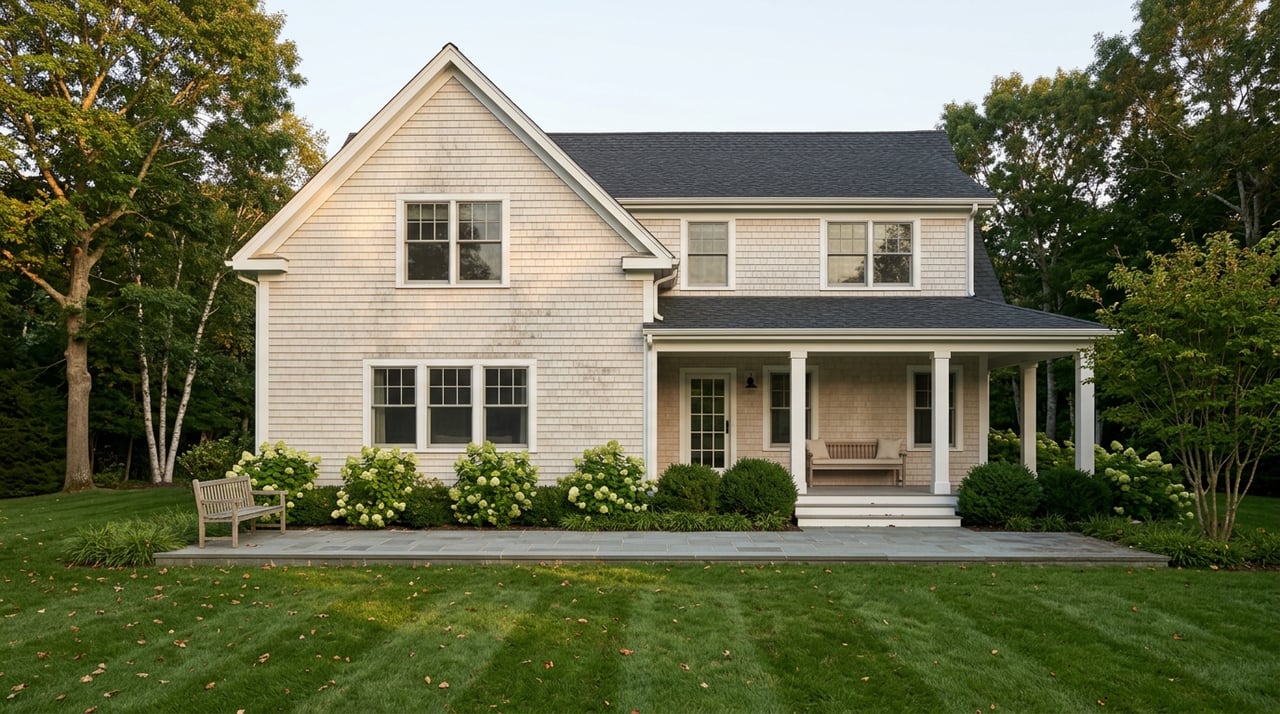
A house on the Kalamazoo River in Douglas does not sit on the market long right now. Homes here have been going under contract in an average of 46 days over the trailing twelve months, well ahead of the 58-day national pace, and only about a dozen properties are active for sale at any given moment. That kind of speed feels like good news for a seller, and it usually is.
But speed cuts both ways. In a market this thin, the one thing that can turn a fast sale into a stalled one is rarely the kitchen or the roof. It is the dock. Waterfront closings in Douglas run into a layer of paperwork that inland sales never touch, and buyers, lenders, and title companies are asking about it earlier in the process than most sellers expect.
What the City Actually Regulates on Your Dock
Douglas has its own ordinance governing pier and dock construction, and it is more specific than most sellers realize. Under Section 151.018 of the city code, a main pier extending from the shoreline must be at least four feet wide, and any finger piers branching off it cannot exceed 60 feet in length or fall below three feet in width. The ordinance also requires that a dock allow for the natural flow of water and littoral materials, and it explicitly prohibits any structure that infringes on a neighboring owner's riparian rights.
Construction has to meet the State Construction Code, and any dock built under a major construction permit needs to handle a live load of 100 pounds per square foot, with lighting installed anywhere the public might use the structure after dark.
None of this is exotic. It reads like a standard local building code. What it means in practice is that a dock built or modified without pulling a permit, even one that looks perfectly solid, may not actually meet the specifications the city requires today.
Why the City's Rule Isn't the Only One That Applies
Here is where Douglas differs from a typical inland lake sale. The Kalamazoo River flows past Douglas on its way to Lake Michigan, and stretches of it are treated as navigable water under federal law. Structures built in or over navigable water, including docks, piers, and boat hoists, can fall under Section 10 of the federal Rivers and Harbors Act, which means a permit from the U.S. Army Corps of Engineers may be required in addition to whatever the city or state asks for.
Michigan's Department of Environment, Great Lakes, and Energy also regulates a wide range of activity on inland lakes and connecting waterways, including dock construction, dredging, and structures placed on bottomland. A dock that satisfies Douglas's four-foot minimum width might still be missing a state or federal sign-off that has nothing to do with the city at all. The Army Corps permitting process for docks tied into the Great Lakes is its own separate track from the local ordinance, and sellers who only think in terms of city rules can be caught off guard when a buyer's attorney asks for both.
The Assumption That Trips Up Closings
The confusion almost always comes down to one mistaken idea about dock paperwork. A permit for a specific structure is a different matter.
| Needs its own paperwork trail |
|---|
| Documentation that an existing dock was ever permitted |
| Proof that a modified or rebuilt dock still meets current dimensions |
| Confirmation that a dock reaching navigable water has Army Corps sign-off, where applicable |
A dock that has been in the family for thirty years without incident is not proof that a permit exists. It is proof that no one has had a reason to ask yet. A sale is often the first time anyone does.
Why the Market's Pace Makes This More Urgent, Not Less
This is the part that gets overlooked. A slow market gives everyone room to sort out paperwork gaps after an offer comes in. Douglas is not a slow market right now. Homes here are selling for a median of $580,000 over the past twelve months, up roughly 5 percent year over year, while properties currently listed are asking closer to $755,000 to $759,000. That gap between what recently sold and what is being asked now points to a market that is tightening, not cooling.
The pace shows up outside the waterfront segment too. In May 2026, an 1850-built farmhouse a few blocks off the river sold in just eight days at $477 a square foot. That is the rhythm buyers have come to expect in Douglas this year: quick decisions, tight timelines, and title companies that move as fast as the offers do.
When a transaction is moving that quickly, there is no cushion for a seller who needs three weeks to track down a permit that may or may not exist. Buyers' agents and lenders have started asking about dock documentation earlier in the process specifically because they have been burned by discovering the gap during underwriting, when a delay is far more expensive for everyone involved.
Before You List: What to Pull Together
A little preparation before the sign goes in the yard prevents almost all of this friction.
- Locate any permit records tied to your dock, whether issued by the city, the state, or the Army Corps of Engineers, and keep them together in one file.
- Measure your current dock against the dimensions in Section 151.018 if it has ever been rebuilt, extended, or repaired since it was originally installed.
- Find out, if you can, when the dock was first built. It helps to have something in writing that supports the dock's history.
- If your dock extends into the river channel itself rather than a private cove or canal, check specifically for federal documentation, since that is the piece most often missing.
- Keep this file separate from your general disclosure packet so it is ready the moment a buyer's agent asks, rather than something you have to assemble under deadline pressure.
Questions Douglas Sellers Ask
What dock paperwork might come up when I sell my house? Title companies increasingly want to see documentation showing continuity between the permit and the structure currently in the water.
My dock has been there for decades without a problem. Why would that change now? Age is not the same as compliance. A sale is often the first moment anyone goes looking for dock paperwork.
Does any of this apply if my home is on Lake Michigan rather than the river? It applies with even more weight. Docks tied into the Great Lakes fall more squarely under Army Corps Section 10 review.
If you are weighing a sale on the Kalamazoo River or anywhere along the Douglas shoreline, the dock question is worth answering before the first showing, not after an offer lands. Shanna Ax has spent more than twenty years working this stretch of Southwest Michigan and can walk you through exactly what your property's dock history needs before it goes on the market. Let's Connect.
This article is general information, not legal, tax or financial advice. Consult a qualified professional about your situation.