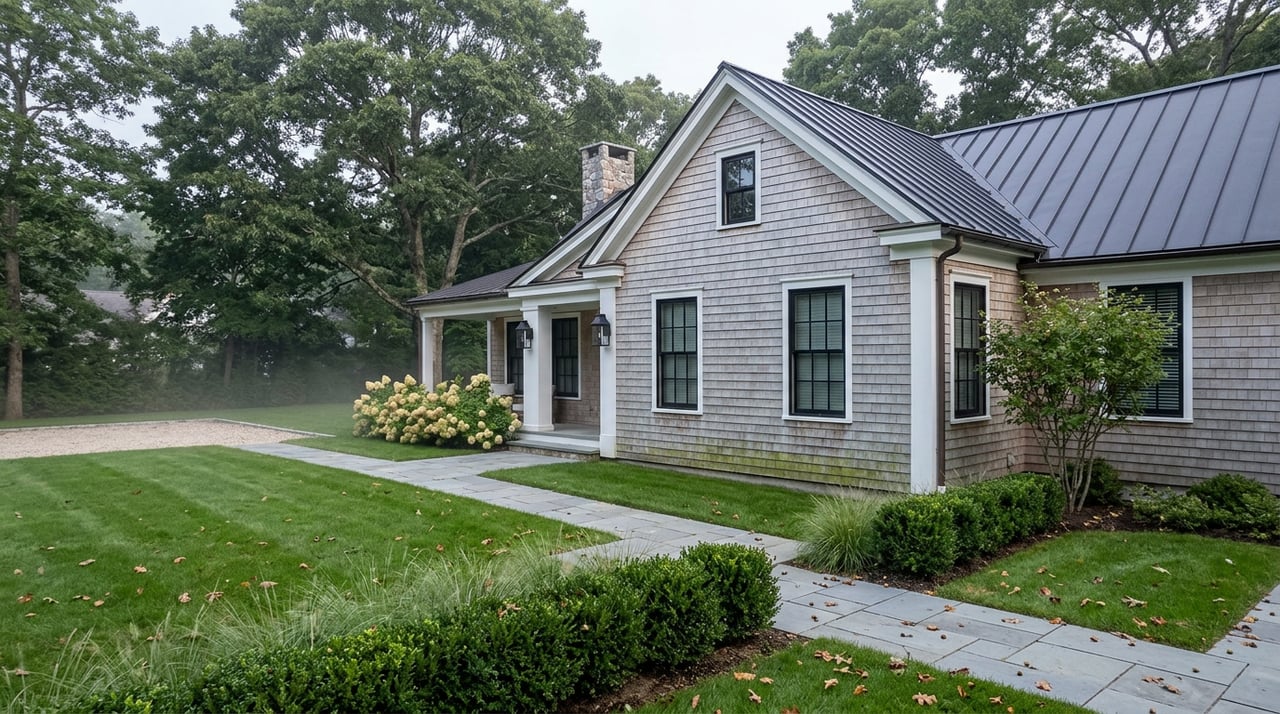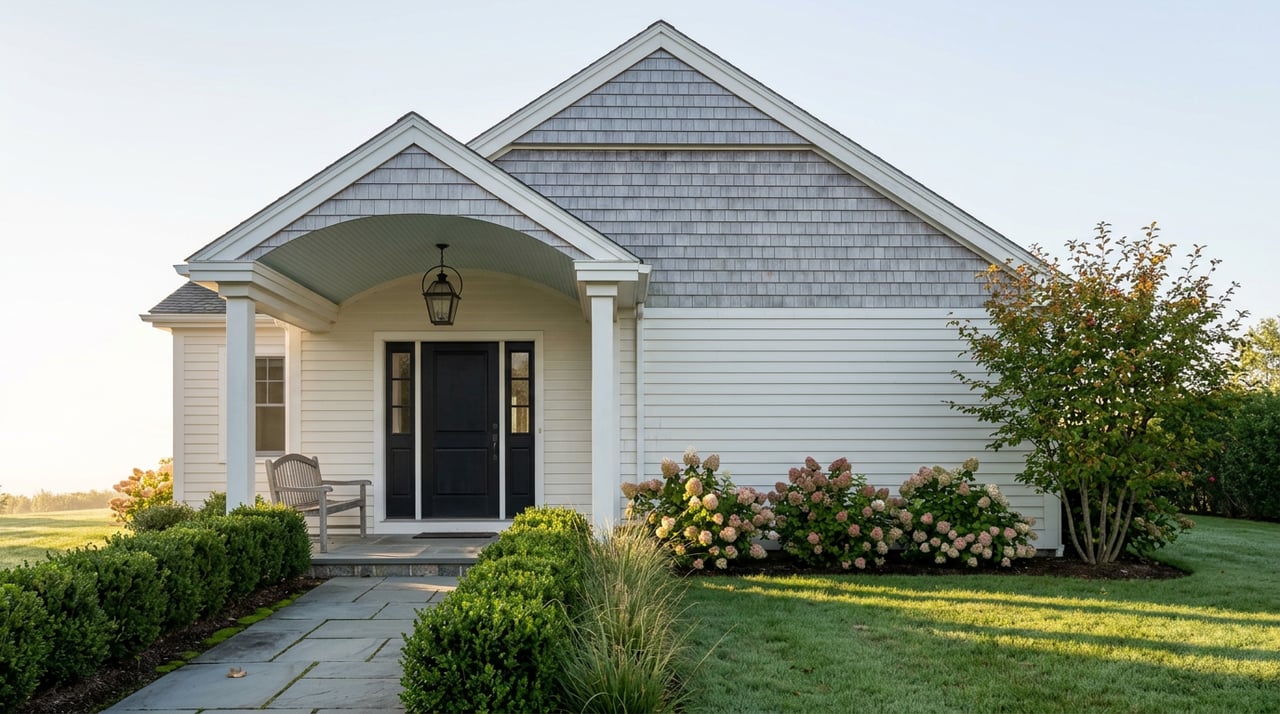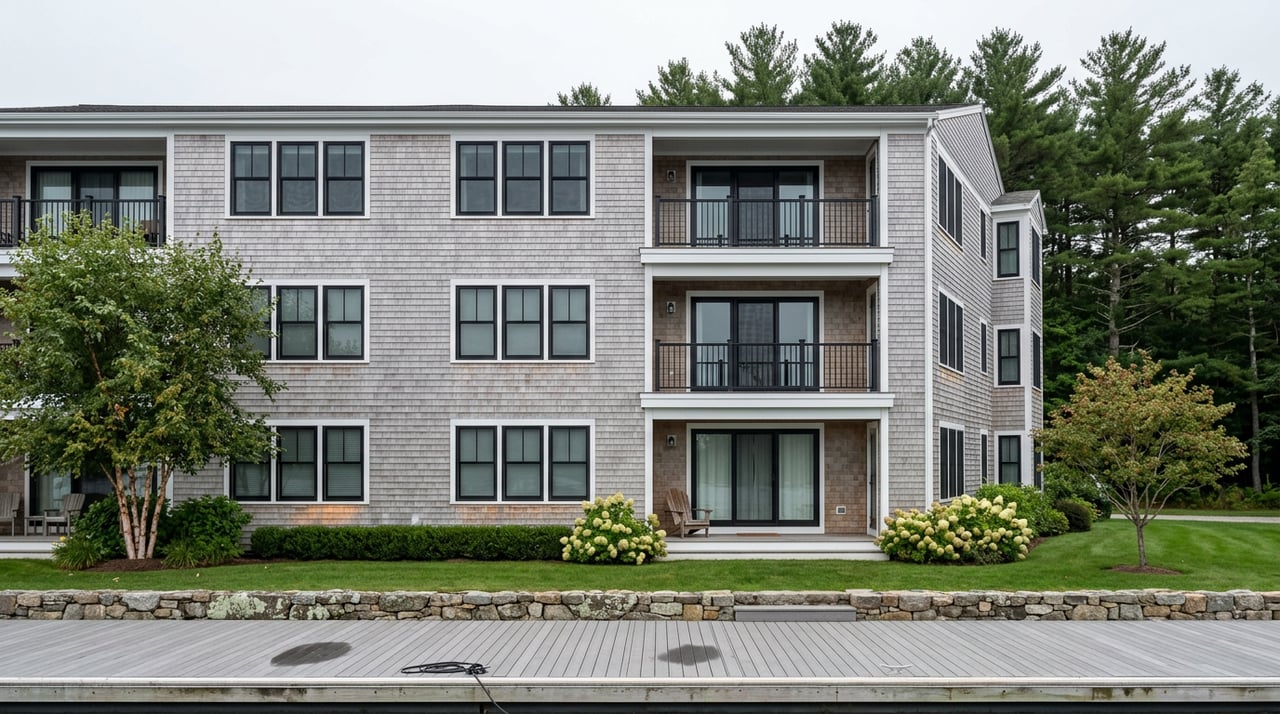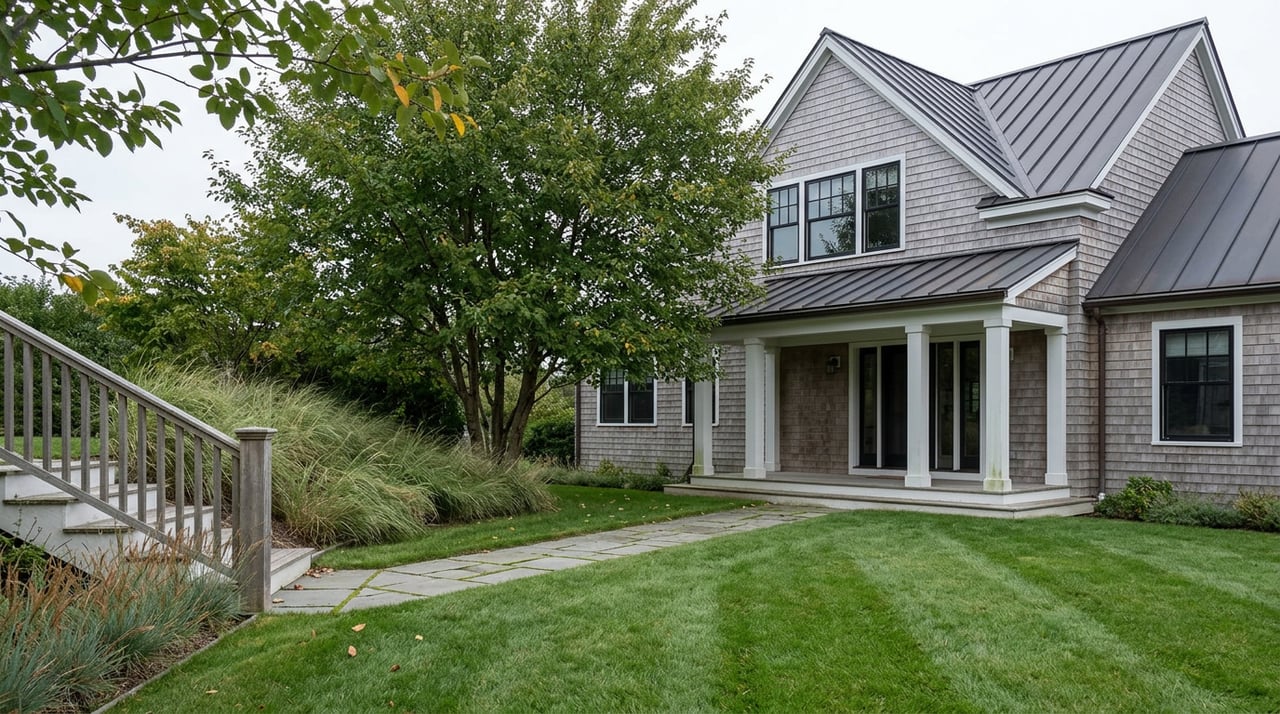
Two listing sheets, same price bracket, same square footage, both promising a home "steps from the beach." One turns out to mean exactly that: you walk out the back door and your feet are in sand within thirty seconds. The other means a bluff, a switchback staircase, and on a windy October afternoon, a climb back up that feels considerably longer than the listing photos suggested.
Nobody tells you which one you're getting until you're standing in the yard. And in a market where nearly every waterfront listing in South Haven reaches for some version of that phrase, the actual mechanism of getting from your door to the water is doing more to set price, insurance exposure, and rental potential than the frontage number on the spec sheet ever will.
The phrase covers at least four different arrangements
South Haven's beach listings use "steps from the beach" loosely enough that it has stopped meaning much on its own. Walk through what it actually describes on the ground and you find at least four distinct setups, each with its own cost and convenience profile.
Some North Beach cottages sit at grade, with no bluff between the yard and the shoreline. You step off the patio and you're on sand. These are the easiest to live in day to day and, unsurprisingly, they tend to command the strongest prices per square foot once they come to market.
A second category sits above a bluff and reaches the water by fixed stairs. South Beach's well known Blue Stairs give the public a path down to the sand, and a number of private homes on that same bluff face their own version of the descent, useful, but not something you want to manage twice a day with a cooler and two toddlers.
A third category solves that problem with an electric tram or lift. One recent Monroe Park listing on Lake Shore Drive notes that beach stairs and an electric lift sit kitty-corner to the home, a convenience that adds real value but also adds a mechanical system that needs upkeep and eventually replacement.
A fourth category skips private frontage altogether in favor of shared or association access. A Mount Pleasant listing just north of downtown offers private access to 1,300 feet of shared Lake Michigan beach reached by both tram and stairs, a communal arrangement rather than a deeded strip of sand behind the house. The newer Harbor Club community takes this a step further, trading direct beach frontage for a 40-acre riverfront setting, its own 110-slip marina, and a clubhouse pool two blocks from the lake instead of a private stretch of sand.
None of this shows up cleanly in a price-per-square-foot comparison. It shows up in how the house actually gets used, what maintenance you inherit, and what a buyer is willing to pay once they've walked the path themselves.
The waterfront discount nobody expects
Here is the number that should make any buyer slow down. As of Movoto's August 2026 market snapshot, South Haven's citywide median list price stood at $550,000, with homes spending a median of 74 days on the market before going under contract. Redfin's waterfront-specific search for South Haven, pulled around the same window, showed 66 active waterfront listings carrying a median asking price of $499,000, a figure that sits below the town's overall median rather than above it.
On its face, that looks backwards. Waterfront is supposed to cost more, and in the segment that actually drives resale value, it still does. The Southwestern Michigan Association of Realtors' report on the South Haven 49090 zip code for October 2025 put the median sale price for single-family homes at $653,156, up 28 percent from $510,306 the year before. That's a very different number than the $499,000 waterfront median, and the gap tells you something real.
The lower waterfront figure isn't evidence that lake frontage is losing appeal. It reflects what's actually sitting inside that category. A mix of older, smaller-footprint cottages, many built when a stair-and-tram arrangement was simply how people got to the water, sits alongside newer no-bluff construction in the same search results. The older stock pulls the median down even as the easiest-access, newest-built homes keep setting records on their own.
There's a maintenance dimension buyers often miss until it's their problem. One current bluff-side listing spells it out directly, noting the slope will need a new revetment system installed before it's considered stable for the long term. That's a capital expense that comes attached to the view, and it almost never shows up in the price-per-square-foot math that portals default to. A home priced ten percent below a comparable no-bluff property might look like a bargain until you price out what stabilizing forty or sixty feet of bluff actually runs.
Rental income follows the covenant, not the shoreline
Buyers eyeing a South Haven purchase as a short-term rental often assume the water itself is the deciding variable. It isn't. The deciding factor is almost always the individual property's deed restriction or association bylaw, and those vary block by block in ways that have nothing to do with which beach the house faces.
A new-construction home near North Beach markets itself with no rental restrictions at all, built specifically with vacation-rental income in mind. A short walk away, a nearly-new home in a nostalgic lakeshore resort community advertises the opposite: no short-term rentals permitted, a feature aimed at buyers who want quiet neighbors rather than a rotating guest list. Meanwhile a Monroe Park cottage on the same stretch of Lake Shore Drive permits short-term rentals outright, all new windows and a garage kitchenette included for exactly that use.
None of this is visible from the street, and none of it is set by a single citywide ordinance. It lives in each community's own documents. That means the question has to be asked property by property, not assumed from a neighborhood's general reputation for being rental-friendly or not.
Questions worth asking before you tour
Does a waterfront listing in South Haven always include private beach access? No. Communities like Mount Pleasant offer shared or association access reached by a tram or stairway rather than a private deeded strip of sand, and communities like Harbor Club trade beach frontage entirely for a private marina and clubhouse pool, so the specific language in the listing matters as much as the price.
Who pays for bluff stabilization if I buy a bluff-side home? Typically the homeowner, unless the property sits within an association that shares maintenance of a staircase or revetment system. At least one active bluff-side listing this year flags that a new revetment install is needed before the slope is considered stable long term, a cost worth pricing into any offer before it becomes a surprise after closing.
Can I count on short-term rental income if I buy near the beach? Only if that specific property's covenant allows it. Rental permissions range from communities with no restrictions at all to resort-style neighborhoods that prohibit short-term rentals by design, and the difference can sit two doors apart.
South Haven rewards buyers who look past the frontage number and ask what the water access actually requires on an ordinary Tuesday, not just a postcard afternoon. If you're comparing listings and want a second read on what a specific access type, rental covenant, or bluff condition means for your plans, Shanna Ax is happy to walk the path with you before you write an offer. Let's Connect.