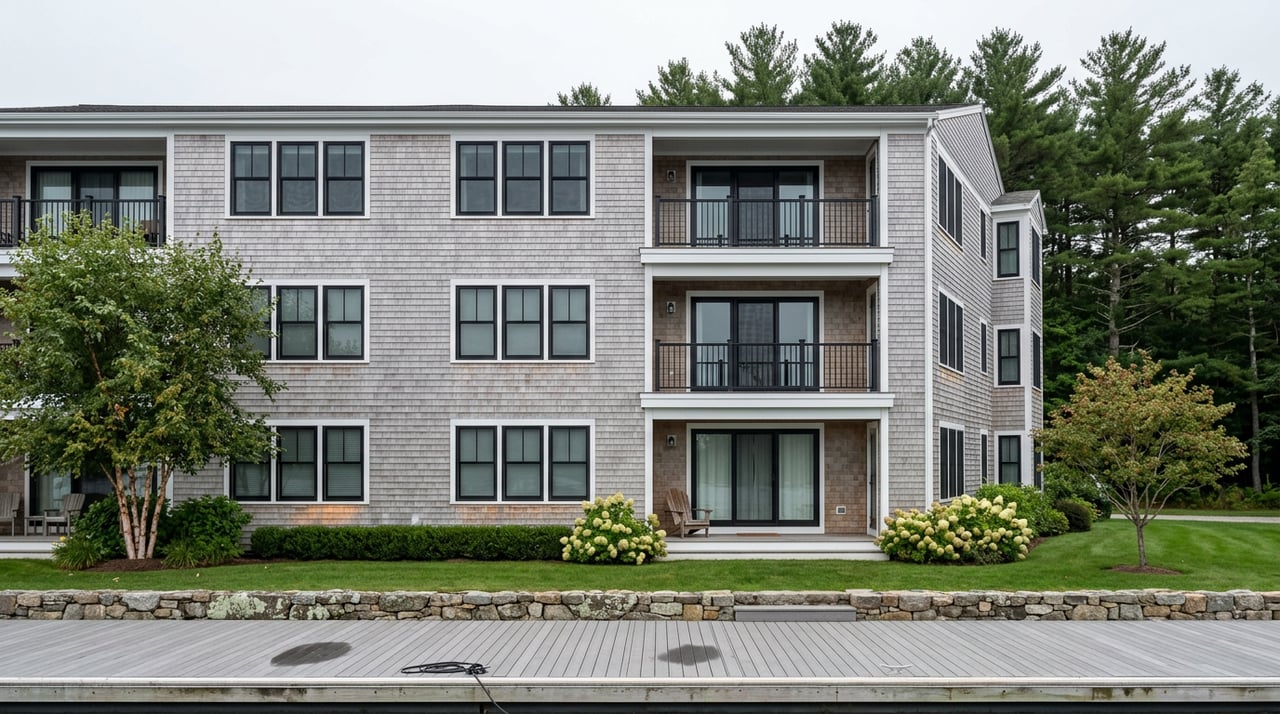
A one-bedroom unit at North Shore Condominiums recently listed with a detail that stops most rental-income buyers cold: the unit carries a valid city-issued short-term rental certificate, but the association's own bylaws require a minimum seven-night stay, longer than anything the city itself demands. The listing also noted that the building has recently limited how many of those certificates it will allow at all.
That single condo tells you more about how South Haven actually regulates vacation rentals than most buyer guides do. The city has a rule. The building has a separate rule. They don't always match, and the gap between them is where rental-income underwriting quietly falls apart.
The 1-in-4 ratio everyone quotes, and why it doesn't apply the way people think
Ask around and you'll hear the same fact stated with confidence: South Haven caps short-term rentals at a 1-to-4 ratio of the housing stock, meaning roughly 20 percent of homes in the city can hold an active STR license at any given time. It's true, and it's the reason STR licenses in South Haven behave like a scarce asset. Once the ratio is full, a legally rentable property carries real premium value simply because a new applicant can't get in the door.
Here's what that widely repeated fact leaves out: the ratio cap doesn't apply to every dwelling in the city. Under an amendment the city adopted as Ordinance 1067, certain PUDs and specific condo and apartment complexes are exempt from the ratio calculation entirely. They sit outside the scarcity math that makes single-family STR licenses so competitive.
That's a meaningful distinction for anyone comparing a single-family lake cottage to a condo unit as an income property. One competes for a capped, shrinking pool of citywide licenses. The other, depending on the specific building, may not be competing for a license slot at all.
Why the exemption isn't the good news it sounds like
If a condo building is exempt from the citywide cap, it's tempting to assume the path to rental income is simpler there than anywhere else in South Haven. The North Shore Condominiums example shows why that assumption is incomplete.
City code addresses zoning and licensing. It does not override what a condominium association decides in its own governing documents. A building can sit outside the 1-in-4 ratio and still choose to cap the number of active rental certificates it permits, set a minimum stay well beyond the city's own floor, or bar short-term rental altogether through its bylaws. Some South Haven condo buildings do exactly that. Others don't restrict at all beyond following city registration.
The practical result is that "is this condo in an exempt building" and "will this condo's association actually let me rent it short-term, and on what terms" are two separate questions with two separate answers. A buyer who confirms the first and skips the second can close on a property that's legally outside the city's cap and still find the building itself won't support the rental plan the purchase was built around.
Before assuming a listed rental history carries forward with the sale, it's worth confirming directly with the association, not just the listing agent:
- Whether the certificate or license is tied to the unit or to the current owner, and whether it transfers on sale
- The building's minimum and maximum stay lengths, which can be stricter than the city's own rules
- Whether the association has a cap on the number of active rental certificates it allows, and whether that cap is currently full
- Any recent board action tightening rental rules, since these can change faster than city ordinance
The 2026 wrinkle: a legacy license doesn't mean a settled license
Buying a South Haven condo this year adds a second layer of timing risk that has nothing to do with condo exemptions and everything to do with where the city is in its own rulebook transition.
South Haven has been moving property owners from an older framework, Article X, to a newer one, Article V, Chapter 14, which requires zoning compliance review and biannual inspection before a full license is issued. All units still registered under Article X were set to expire on or before May 1, 2026.
That deadline collided with reality. Heading into the March 2, 2026 city council meeting, staff had completed zoning compliance review on only about 20 percent of applications, out of roughly 700 STRs operating in the city, according to reporting on the meeting. That left an estimated 500 rentals in a kind of limbo just as the summer booking season was ramping up.
City Manager Kate Hosier described the pressure plainly at that meeting: staff had "sharpened our pencils" to find a way to keep owners renting while review continued, rather than let hundreds of properties go dark over a paperwork backlog. The fix the council landed on was a conditional license, available for the 2026 season starting March 27, 2026, that lets an owner keep operating while the city finishes the underlying zoning and inspection review. If a unit later fails that review, the conditional license is revoked.
What this means for a buyer closing on a South Haven condo now: a current STR "license" on the listing sheet could mean three different things. It could be a fully processed Article V license. It could be a conditional license issued to bridge the 2026 backlog, which is not the same as a finished compliance determination. Or, if the seller never completed the transition, it could be an Article X registration that has already lapsed or is about to. Each status carries a different level of certainty about whether that income stream is still there next season.
What this looks like at the closing table
None of this means South Haven condos are a bad bet for buyers who want rental income alongside personal use. It means the diligence has to run in two directions at once rather than one. The city's ordinance tells you whether a building falls inside or outside the ratio cap. The association's governing documents tell you whether the building will actually let you rent, and on what terms. And the calendar tells you whether the specific license attached to that unit is a finished determination or a bridge that's still pending review.
A buyer who checks only the city side of that equation, sees the 1-in-4 cap, and assumes a condo automatically sidesteps it is skipping the half of the question that actually determines whether the rental income in their spreadsheet is real. The unit at North Shore Condominiums makes the case well: subject to a certificate cap and a minimum stay set by the association, not the city's own baseline.
If you're weighing a South Haven condo purchase against the rental income it might produce, the right sequence is jurisdiction first, then association documents, then license status, in that order, before the numbers go into an offer. I've walked buyers through exactly this kind of layered check on South Haven waterfront and downtown condos, and I'm glad to do the same for you.
A few questions worth asking before you write an offer
Does every South Haven condo building qualify for the ratio-cap exemption? No. Ordinance 1067 exempts certain PUDs and specific condo and apartment complexes, not condominiums as a category. Confirm the exemption status of the specific building, not the general rule.
If a listing shows an active STR certificate today, will it still be valid after closing? Not automatically. Depending on whether the license is a finished Article V determination, a 2026 conditional license, or an expiring Article X registration, the status attached to the unit can change before or shortly after you close. Ask the seller or the city directly which category applies.
Can a condo association say no to short-term rentals even if the city allows them? Yes. City ordinance sets the floor for zoning and licensing. A condominium association's bylaws and declaration can add restrictions on top of that, including stricter minimum stays or outright prohibition, and those documents govern regardless of what the city permits citywide.
Ready to look at specific South Haven condo buildings with this kind of scrutiny built in from the start? Shanna Ax would love to help you find the right fit. Let's Connect.