Search "Douglas MI median home price" this week and three different sites will hand you three different answers, none of which agree by even a rough margin, and none of which tell you much about the specific house you're actually considering.
That confusion isn't a glitch in the search. It's the honest result of trying to compress four very different Douglas markets into a single figure, in a town where the monthly sales count is small enough that a handful of closings can swing the average by hundreds of thousands of dollars.
What the three numbers actually said
Here's what showed up, side by side, with the time window each one covers:
| Source | Window | Figure | Days on Market |
|---|---|---|---|
| Homes.com | current listing pool, August 2026 | $620,000 median home price | not reported |
| Movoto | June 2026 | $759,000 median list price | 309 days |
| Redfin | three months ending May 2026 | $869,000 median sale price, up 75.5% year over year | 11 days |
Part of the gap is apples to oranges. Movoto is quoting what sellers are asking. Redfin is quoting what buyers actually paid. Those numbers rarely match in any market. But even accounting for that difference, a $249,000 gap between the low and high figures, and a days-on-market swing from 11 to 309, is too large to explain as a list-versus-sale quirk. Something else is happening underneath.
The real mechanism: Douglas is a thin market
Redfin's own count is the tell. Over that three month window ending in May 2026, 13 homes sold in the month of May. Not 13 hundred. Thirteen.
When a market moves that few homes a month, the median isn't really measuring appreciation or depreciation. It's measuring which specific houses happened to close. If two Lake Michigan estates close in the same month as a couple of downtown condos, the median jumps toward the estates. If the next month is heavier on condos and cottages, the median falls back down, and nothing about the underlying value of any individual home has to change at all for that to happen.
That's the honest explanation for Redfin's 75.5% year-over-year jump in the three months ending May 2026. It isn't that Douglas home values rose three quarters in a single year. It's that the mix of what happened to close shifted toward the expensive end. A market this size doesn't produce a smooth line. It produces a jagged one, and every portal is reporting a different point on that jag depending on which weeks it happened to sample.
Movoto's 309-day median time on market for June 2026 points to the same root cause from a different angle. Listed inventory ranges from $79,900 up past $1,375,000, per the same source, a spread wide enough that "typical days on market" barely means anything as a single number. A $339,500 condo and a $1,750,000 estate are not competing for the same buyer, and lumping their timelines together produces a figure that describes neither one accurately.
What's actually for sale right now tells the better story
A walk through this week's live listings in Douglas makes the segmentation obvious in a way no median can. As of late August 2026, the market includes a condo at 34 S Spring Street listed at $339,500, a home on Center Street at $599,000, a property on Parkside Lane at $1,100,000, a listing on West Center Street at $945,000, a home on 2nd Street at $1,100,000, and an estate-level listing on Heirloom Lane at $1,750,000.
That's not one market with some scatter around a middle point. That's four markets, each with its own logic.
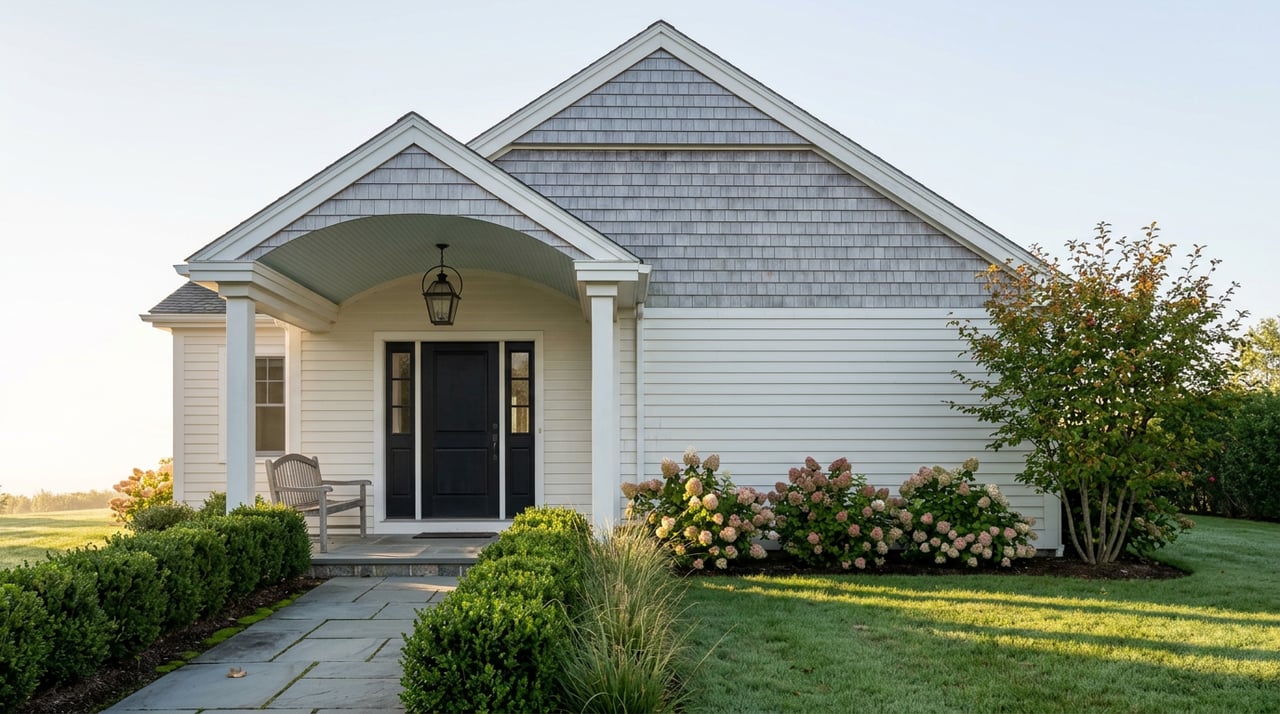
Downtown and walkable. Homes and condos along or near Center Street and the Blue Star Highway corridor, within an easy walk of shops, restaurants, and the Douglas Root Beer Barrel. This is the entry tier, where the $339,500 condo and $599,000 house on Center Street sit. Buyers here are usually prioritizing walkability over waterfront, and they're often comparing against downtown Saugatuck rather than against anything on the water.
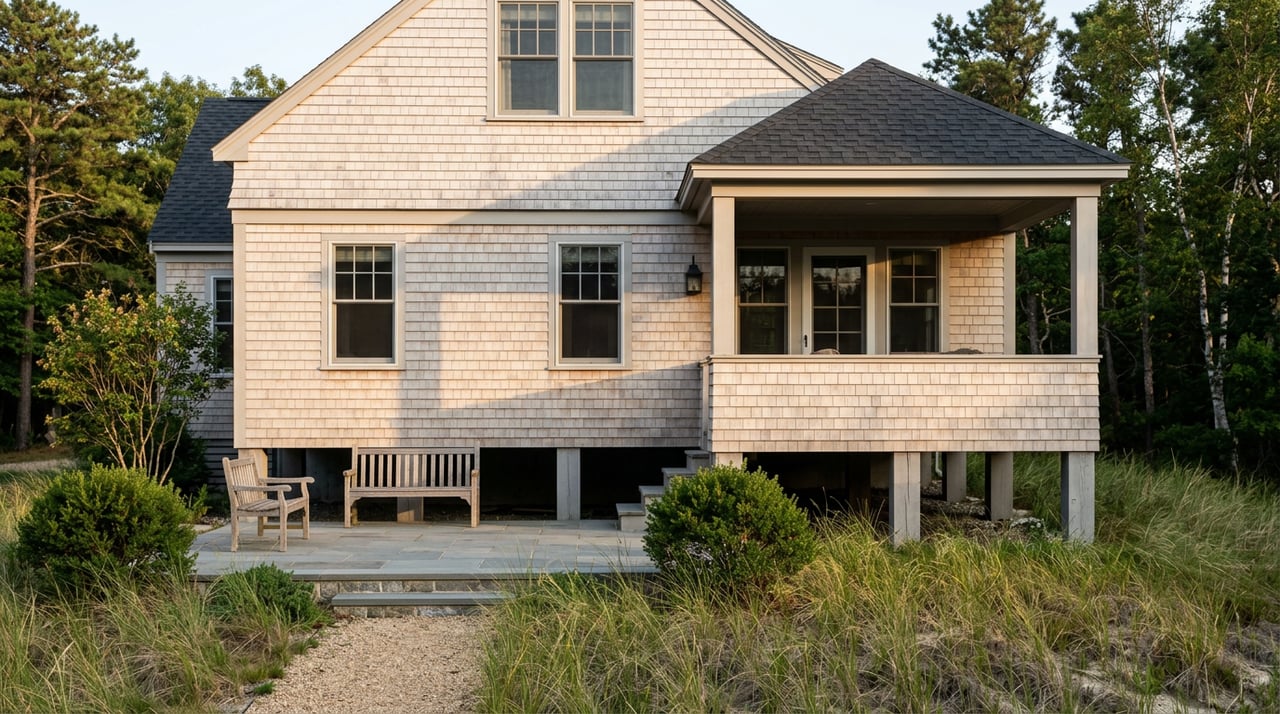
Wooded inland retreats. Neighborhoods like Felkers Woods and West Shore Woods, tucked among mature trees a short drive or walk from Lake Michigan beaches without sitting directly on the water. These lots trade privacy for a lower price point than true waterfront, and several carry no HOA dues, since the land itself, not a shared amenity package, is the appeal.
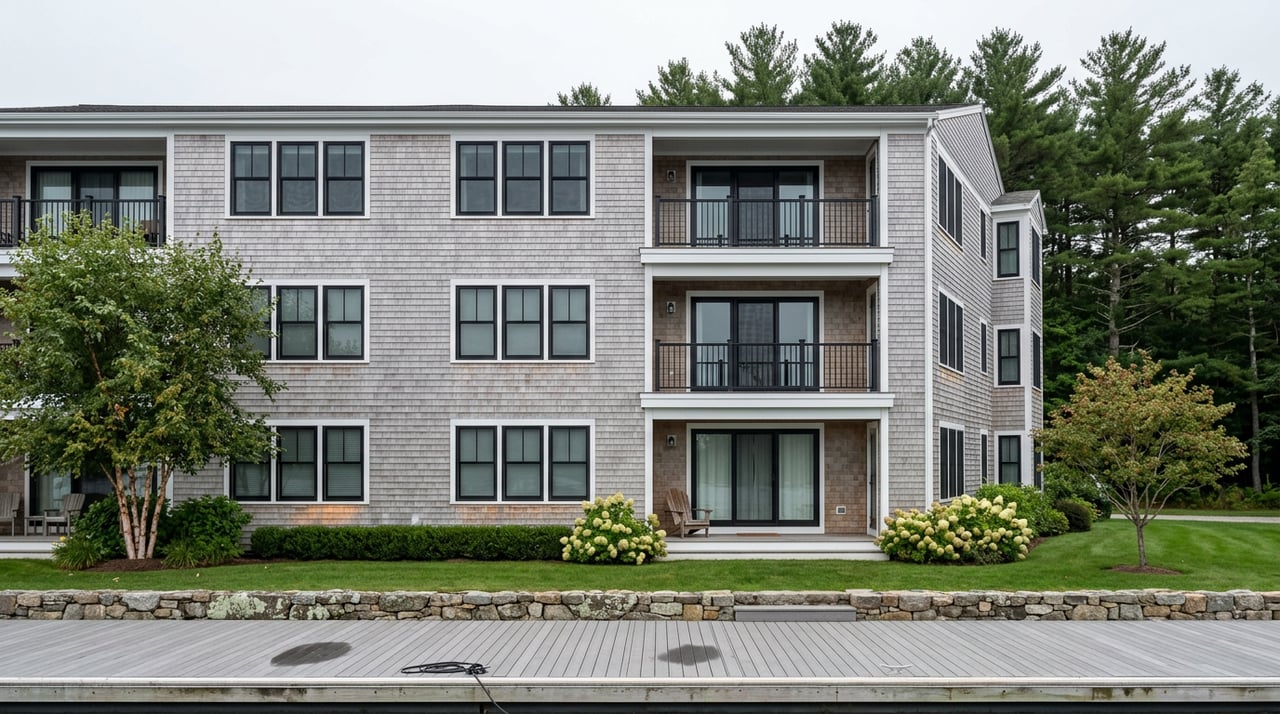
Bayou and river-system frontage. Properties near Wade's Bayou, the 1.8 acre park off Center Street that opens onto Kalamazoo Lake and the Kalamazoo River, part of a historic waterway system that has shaped this stretch of Allegan County for generations. This segment also includes deeded-access communities like Sandpiper Bay. Buyers here typically want a dock and calm water for kayaking or boating more than an open Lake Michigan view, and the Wade's Bayou paddling routes are part of the daily texture of owning here, not just a weekend novelty.
True Lake Michigan frontage. The top tier, including the Felker's Lakeshore Subdivision and homes within an easy walk of Douglas Beach. This is where the $1,750,000 listing on Heirloom Lane lives, and it's the segment most exposed to the swings that show up in the townwide median, since a single closing here can move the number for the entire month.
Why this matters more than the headline figure
If you're comparing Douglas to Saugatuck, South Haven, or another Art Coast town, the townwide median is close to useless for that comparison unless you already know which of these four segments you're shopping in. A buyer looking at wooded inland lots in Felkers Woods is not competing against, or usefully compared to, someone bidding on Lake Michigan frontage near Douglas Beach. Treating the $869,000 or $759,000 or $620,000 figure as "the price of Douglas" flattens four distinct decisions into one number that describes none of them well.
The better question isn't "what's the median in Douglas." It's "what did homes like this one, in this segment, actually sell for in the last few months." That's a smaller, less headline-friendly question, and it's the one that actually holds up when you get to the negotiating table. Pricing strategy in a market this thin has to be built from segment-level comparables, not a townwide average that a few closings can push around by six figures in either direction.
A few questions worth asking before you lean on any number
If the median is this unreliable, what should I actually track? Ask for recent closed comparables within your specific segment, not the town. A wooded Felkers Woods lot and a Lake Michigan frontage estate should never be pulling from the same comp set.
Does the 75.5% year-over-year jump mean Douglas prices are genuinely rising that fast? Not on its own. With only 13 sales recorded in that May 2026 window, a shift toward higher-value closings can produce a number like that without reflecting a real change in what any individual home is worth. Treat any single-window statistic from a market this size with some skepticism until you see it repeat over several months.
How many homes actually sell in Douglas in a typical month? Based on Redfin's count for May 2026, roughly a dozen. That's the number that explains everything else. A dozen sales is not enough to smooth out a median the way it would in a larger market, which is exactly why the figure moves so much from source to source and month to month.
Douglas rewards buyers and sellers who look past the single number on the portal page and ask which of its four markets they're actually standing in. If you want a read on Douglas or the wider Saugatuck corridor that starts from your specific property type rather than a townwide average, Shanna Ax can walk through the current comparables for your segment. Let's Connect.